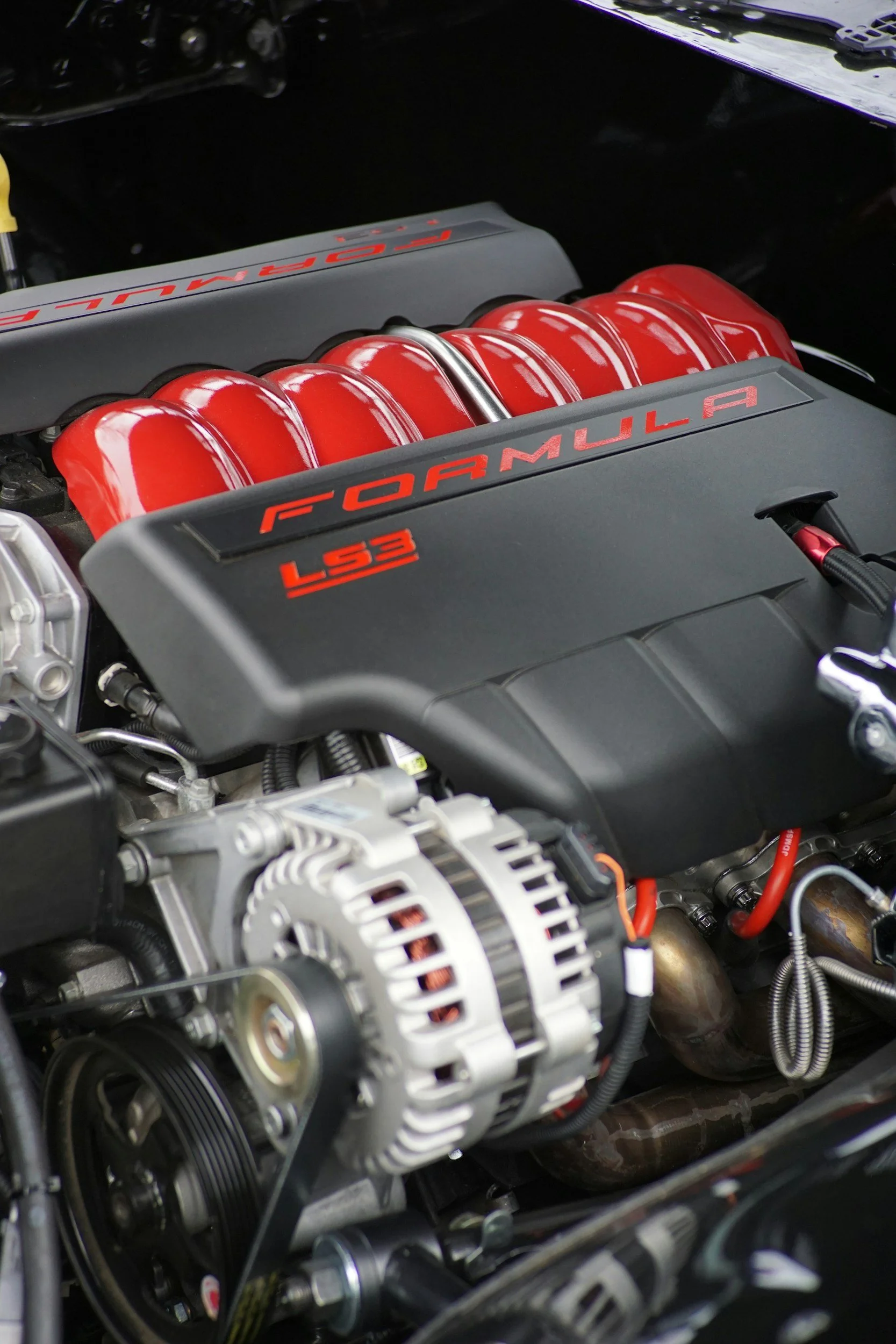
What’s Involved in an LS Swap?
While the LS swap world is well-developed, it’s not quite “drop-in.” Key components include:
Engine and Transmission
Popular engine choices:
5.3L (LM7, L59, etc.) – budget favorite
6.0L (LQ4/LQ9) – more torque
LS1/LS3 – lighter, higher-revving
Transmission options range from manual T56/TR6060 to automatics like the 4L60E and 4L80E.
Mounts and Oil Pan
Vehicle-specific swap mounts and low-profile oil pans are often required for proper clearance.
Wiring and ECU
Standalone wiring harnesses and re-flashed factory ECUs have made this step dramatically easier. Many companies offer plug-and-play solutions.
Cooling and Fuel System
High-pressure fuel pumps, return-style or returnless fuel systems, and upgraded radiators are standard swap requirements.
Exhaust and Driveshaft
Headers designed for LS swaps save time, and custom driveshafts are often needed to match the new transmission location.
Common Mistakes to Avoid
Underestimating costs: The engine may be cheap, but accessories, wiring, and fabrication add up.
Ignoring drivetrain strength: Stock rear ends and axles may not survive LS torque.
Poor planning: Buy parts that work together—mixing and matching without research can create headaches.
Skipping tuning: Even stock LS engines benefit hugely from a proper tune.
Is an LS Swap Worth It?
If your goal is originality, an LS swap may not be the right choice. But if you want:
Reliable horsepower
Easy maintenance
Modern performance
Massive aftermarket support
…it’s hard to beat.
LS swaps have earned their reputation not because they’re trendy, but because they work. They allow older cars to keep their character while gaining the power, efficiency, and reliability of modern engineering.
The Top 10 Things
-
Before buying parts, decide what you want:
Daily driver, weekend cruiser, track car, or drag build?
Stock reliability or cammed, high-RPM power?
This decision affects engine choice, transmission, rear end, cooling, and tuning. Changing direction mid-swap is the fastest way to blow the budget.
-
Not all LS engines are equal.
5.3L – best budget option, huge availability
6.0L – more torque, heavier
LS1/LS3 – lighter, higher performance, higher cost
Check compression, accessory spacing, and oil pan style before buying.
-
The engine doesn’t work alone.
Match the transmission to the power level (T56, TR6060, 4L60E, 4L80E)
Confirm shifter location and crossmember fit
Make sure your rear end can handle LS torque
This is where many swaps fail after the first hard pull.
-
Engine placement is critical.
Buy vehicle-specific swap mounts
Use a low-profile or rear-sump oil pan for crossmember clearance
Verify driveline angles before final tightening
Incorrect placement causes vibration, clearance issues, and premature failures.
-
LS engines require high fuel pressure (usually ~58 psi).
Use an EFI-rated pump (in-tank preferred)
Correct regulator setup (return or returnless)
Proper fuel line sizing
A weak fuel system will limit power or destroy the engine.
-
This is where most beginners panic.
Use a standalone or swap-specific wiring harness
Have the ECU re-flashed to remove VATS, emissions codes, and unused sensors
Label everything before installation
Clean wiring saves hours of troubleshooting later.
-
LS engines generate heat—especially in older engine bays.
Aluminum radiator
Proper fan shroud or electric fans
Steam port plumbing (often overlooked)
Cooling problems don’t show up immediately—but they will show up.
-
Exhaust fitment affects everything.
Use LS swap headers designed for your chassis
Check steering shaft and starter clearance
Plan for O2 sensor placement
Waiting until the end often means redoing earlier work.
-
Even stock LS engines need tuning after a swap.
Correct air/fuel ratios
Proper idle control
Fan activation and transmission behavior
A bad tune can make a great swap feel terrible—or kill the engine.
-
The engine is only part of the cost.
Driveshaft
Accessories and brackets
Fluids, fittings, hardware
Unexpected fabrication
Plan for at least 20–30% over your estimated budget.